
Pennsylvania's School Bus Stopping Law: What Drivers Get Wrong
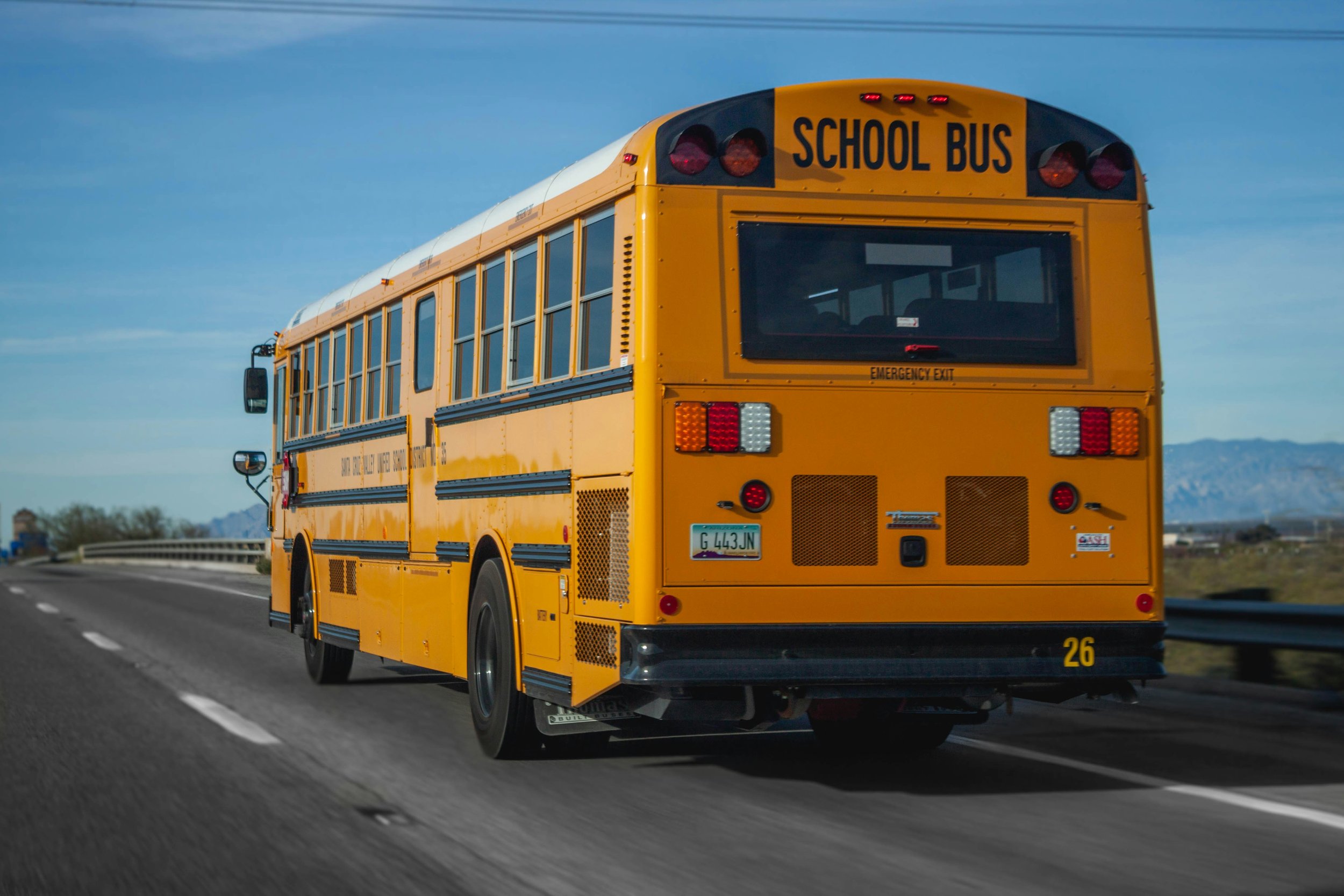
Buses are back on the road across Luzerne County this week, and with them comes the one traffic rule that otherwise careful drivers manage to get wrong every single year.
It is not the part about stopping behind a bus. Everyone knows that one. It is the part about what happens when the bus is coming the other way.
The rule in full
When a school bus has its red lights flashing and its stop arm extended, Pennsylvania law requires you to stop at least ten feet away. That applies whether you are behind the bus, alongside it, meeting it from the opposite direction, or approaching an intersection where a bus has stopped — from any direction.
You stay stopped until the red lights stop flashing and the stop arm folds back in. And then you still wait until the children have reached a place of safety.
The exception people misapply
There is exactly one situation where oncoming traffic does not have to stop: when the roadway is divided by a genuine physical barrier — a concrete median, a guide rail, a metal barrier, a grassy dividing section that actually separates the roadways.
A double yellow line is not a barrier. A center turn lane is not a barrier. A wide road is not a barrier. This is where the tickets come from, and it is where children get hurt.
If you are looking at the situation and wondering whether it counts, that uncertainty is your answer. Stop.
What it costs
If a police officer cites you for passing a stopped school bus, a conviction carries a $250 fine plus a $35 surcharge, five points on your driving record, and a mandatory 60-day license suspension. Not a possible suspension. A mandatory one.
Pennsylvania also allows school districts to install automated stop-arm cameras. A camera violation is civil rather than criminal: a $300 fine, but no points and no suspension. Bus drivers can report violations directly to police as well, which means a citation can arrive in the mail from an incident where nobody pulled you over.
The other half of the school year
Buses get the attention, but a large share of back-to-school pedestrian incidents happen nowhere near one — at crosswalks near schools, at corners where children cut across, and in the parking lots and pickup lines around dismissal, where drivers are distracted, running late, and looking at phones.
Dismissal is the hardest fifteen minutes of the day on any street near a school. Slow down through it, and put the phone somewhere you cannot reach.
If a child is hit
Call 911 first, and make sure a police report is created even if the child seems fine and everyone wants to go home. Injuries to children are routinely missed at the scene, and a head injury in particular can take a day or more to declare itself. An official record made that afternoon is far more useful than a reconstruction attempted a month later.
Get the names and numbers of everyone who saw it, including other parents. Photograph the location, the sight lines, and where the bus or the vehicles were. If a bus was involved, it almost certainly has cameras — but that footage lives on a retention schedule, and nobody preserves it unless someone asks.
And have the child evaluated, that day, even if they insist they are fine. Especially if they insist they are fine.
