

Warehouse & Distribution Center Injuries in Northeastern Pennsylvania
Who Is Liable?
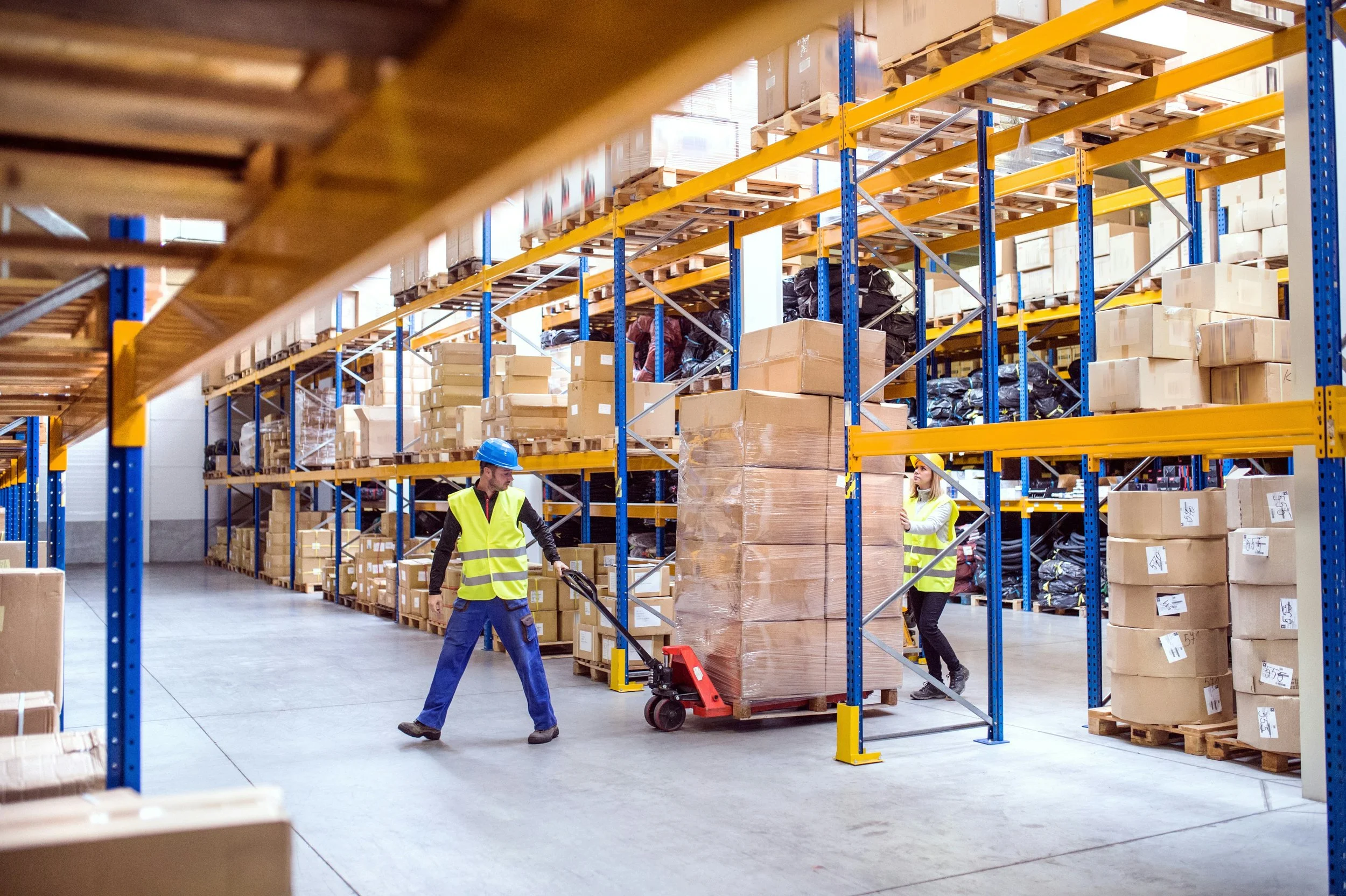
Why warehouse injuries are different here
Northeastern Pennsylvania sits at the intersection of I-81, I-80 and I-476, and the valley floor from Hazleton up through Pittston has been built out with distribution and fulfillment space for two decades. A very large share of the working population in Luzerne County spends its shifts around powered equipment, loading docks and moving freight.
That density matters legally, because warehouse work concentrates exactly the conditions that produce third-party claims: multiple companies operating in one building, equipment owned by one business and maintained by another, freight carriers coming and going, and a large temporary workforce whose employment relationships are not what they appear to be.
The injuries that come up most often
Struck-by and pinned-against incidents involving forklifts and other powered industrial trucks. Falls from docks, from mezzanines, and from ladders and order pickers. Loads falling from racking or from a poorly wrapped pallet. Conveyor and sortation entanglement or crush injuries. Pallet jack and cart injuries to feet and ankles. Repetitive strain and back injuries from pick rates and lifting. Heat injuries in buildings without adequate climate control.
Head injuries deserve particular mention. A struck-by incident involving a hard hat or a low-speed fall is often written up as minor, and the concussion that follows is not recognized for days.
The staffing agency problem
A great many warehouse workers in this region are placed by staffing agencies rather than hired directly. If that describes you, two separate questions arise, and the answers are not always the same.
First, who is your employer for workers' compensation? Often the staffing agency carries the comp policy, but Pennsylvania recognizes a 'borrowed employee' doctrine under which the host company can also be treated as your employer for comp purposes. Second — and this is the question that matters most — if the host company is your employer for comp purposes, the exclusive remedy rule may bar a negligence claim against it. If it is not, that claim may be available.
This turns on the details of the contract between the agency and the host, and on who actually controlled your work. It is not something to guess at from the outside.
Who else might be responsible?
Beyond the host company, the list of potential third parties in a warehouse case is long: the manufacturer of a forklift, lift, conveyor or piece of racking; the company contracted to inspect and maintain that equipment; the trucking company whose driver was in the yard; the building owner or property manager where a structural or surface hazard existed; and in construction or fit-out work, the general contractor.
Does OSHA handle my claim?
No. OSHA is a workplace safety regulator, not a compensation system, and an OSHA investigation does not produce money for an injured worker. But an OSHA inspection file can be valuable evidence, and inspection records are obtainable. If a serious injury occurred, an inspection may already be underway.
You can report a hazard to OSHA yourself, and it is unlawful for an employer to retaliate against you for doing so.
What disappears fastest
Camera footage. Most warehouse systems retain video on a rolling loop measured in days or a small number of weeks, and once it overwrites, it is gone. The same is true of forklift telematics, scan-gun and badge data, and the equipment itself, which will be repaired or replaced.
If you are seriously hurt, the single most useful thing that can happen early is a written preservation demand to every company involved. That is a short letter, and it has to go out before the loop closes.
Talk it through with someone local. If you have questions about your own situation, the attorneys at Joyce, Carmody & Moran can review what happened and explain your options — no cost for the first conversation, and no obligation. We are based in Pittston and handle injury matters throughout Luzerne County.

Let’s Work Together
When you work with us, you can expect clear communication, thoughtful strategy, and a team that is fully invested in your goals. We take the time to understand your needs, tailor our approach, and stand with you through every step of the legal process. Let’s move forward — together.